














The coin you pay with changes more than the price tag. It decides how much you lose to network fees, how long you wait, and whether the amount you pay is stable until renewal. Here is how the coins we accept compare, so you can pick one on purpose.
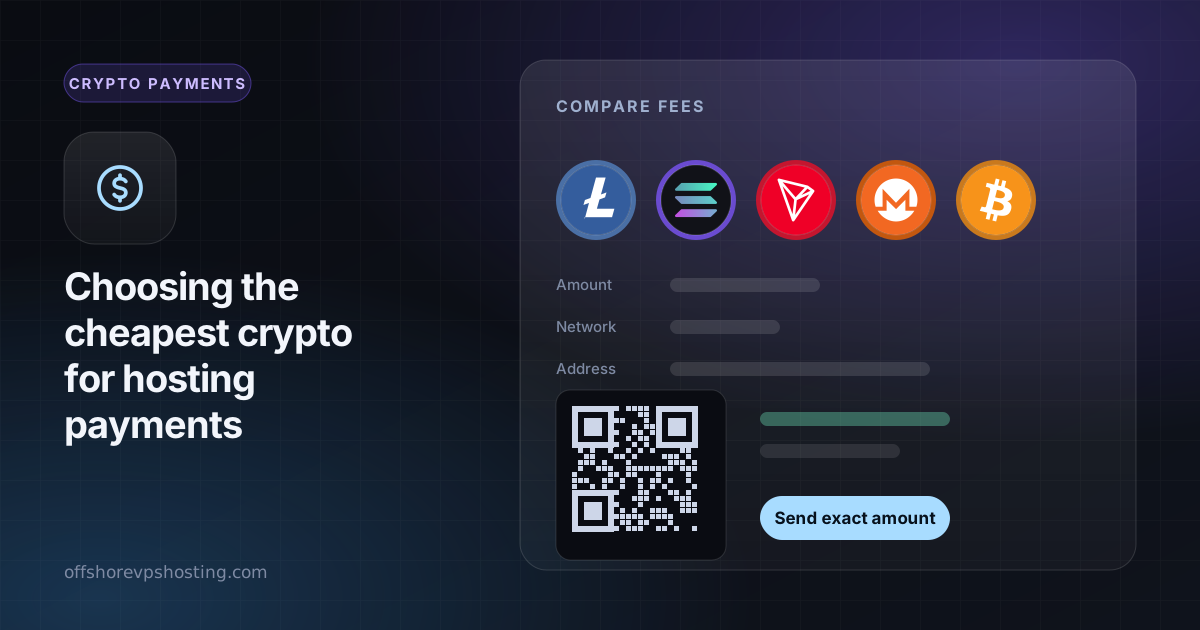
Three things to compare
- Network fee. What the blockchain charges to move your money.
- Speed. How long until your balance is credited.
- Price stability. Whether the coin's value can move between top-up and renewal.
Coin by coin
| Coin | Fees | Speed | Notes |
|---|---|---|---|
| Bitcoin (BTC) | Moderate, varies | Minutes to an hour | Best known. Fees matter for small top-ups. |
| Monero (XMR) | Low | About 20 minutes | Private by default. Wait for confirmations. |
| Litecoin (LTC) | Very low | Minutes | A cheap, fast all-rounder. |
| Solana (SOL) | Very low | Seconds | Fastest. Watch the token vs coin difference. |
| TRON (TRX) and USDT-TRC20 | Low | Seconds to a minute | Popular for stablecoin payments. |
| BNB | Low | Seconds | On BNB Chain. Check the network. |
| Ethereum (ETH) and USDT or USDC on ERC-20 | High when busy | Minutes | Most expensive to move on a busy day. |
The exact figures change daily. Treat the table as a guide to relative cost, not a quote.
So what is cheapest?
For small payments, Litecoin, Solana and USDT on TRON usually cost the least to move. For privacy, Monero. For large payments, the fee barely matters, so use whatever coin you already hold and avoid a conversion step.
A tip on stable value
If you pay for a year at once, a stablecoin removes the risk that your coin moves against the dollar before you finish paying. If you pay month by month, volatility matters less. Read about TRC-20 vs ERC-20 before you send USDT.
Check the full list
We accept more than the coins above, including USDC. The full list and per-coin notes are on the crypto payment hosting page.